Smart Home Automation System
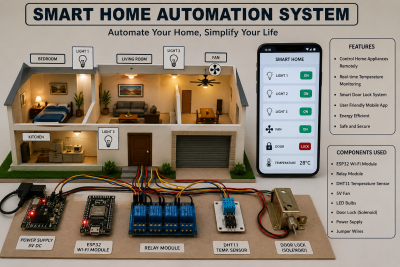
The Smart Home Automation System is an IoT-based project that allows users to control and monitor home appliances such as lights, fans, and door locks remotely using a smartphone or web application. The system uses a microcontroller (ESP32/Arduino), sensors, and relay modules to automate household devices, improve energy efficiency, enhance security, and provide convenience. It enables real-time monitoring and smart control of home appliances from anywhere through an internet connection.

English
Last updated
Sun, 28-Jun-2026